John Asselta
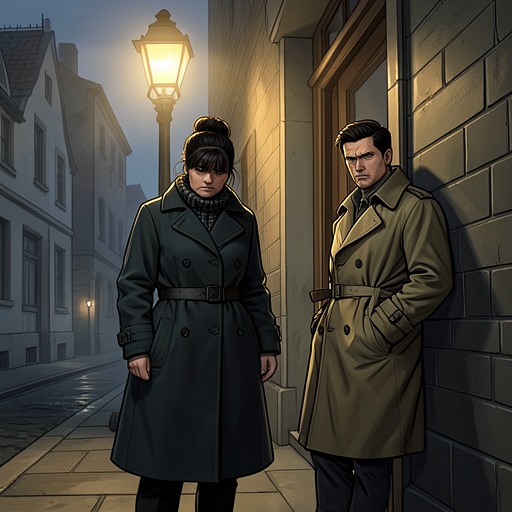
Gone for GoodJohn Asselta, known as the Ghost, is a violent and deeply intimidating figure from Ken Klein’s past whose return draws Will Klein into the dangers surrounding his brother’s disappearance. First introduced through other characters’ fear of him, Asselta seems to be pursuing Ken; later revelations show that Julie Miller was the one person to whom he had disclosed the truth, and that he came back for Carly. His story therefore turns on a contrast between the terror he inspires and the grief and protective purpose disclosed near the end.
Identity and Background
Asselta was two years ahead of Will Klein at Livingston High School and a classmate of Ken Klein. He captained the wrestling team and won the Essex County lightweight title two years in a row. His athletic success ended in disqualification after he deliberately injured a rival, his third violation. Will recalls the spectators’ reaction and Asselta’s small smile as the rival was taken away. The incident establishes a pattern of controlled, purposeful cruelty rather than merely the capacity to fight.
Stories about Asselta’s earlier life circulated as rumor, not confirmed history. One tale claimed he had killed a neighbor’s dog when he was fourteen; another said that, at ten, he had stabbed Daniel Skinner, an older child who had bullied him. The same account suggested that Asselta spent time in juvenile detention and therapy, though Will could not verify it: Ken professed not to know, and their father would neither confirm nor deny the story. Will likewise had heard that Asselta joined the military after graduation, perhaps in a clandestine unit, but nobody could substantiate that account. The uncertainty around these claims is part of his reputation: people describe a history of violence while withholding any reliable explanation of it.
Will’s father had called Asselta’s behavior a Napoleon complex, but Will considered that too simple an answer. Will could not identify what drove him and settled only on the certainty that Asselta was exceptionally cruel. The Ghost’s pale complexion and delicate features could make him seem almost gentle to adults, and Will says he could be charming with them. That disarming quality coexists with the reputation that made him frightening to nearly everyone around him.
Return and Pursuit
Asselta re-enters the story first through a meeting with Philip McGuane at a grave. McGuane has stopped to read the inscription when Asselta approaches carrying flowers. He places them by the tombstone, pauses, and touches it; the scene offers a private, mournful gesture without identifying the person buried there. McGuane, who knows him as the Ghost, remains still and fearful. The encounter presents Asselta not simply as a criminal presence but as someone connected to a personal history that McGuane cannot comfortably face.
McGuane later includes Asselta in a plan involving Joshua Ford. McGuane has considered whether bringing him in is wise, but concludes that Asselta has a stake in the matter and is effective. When Ford opens the door, Asselta is prepared with an iron baton. The detail makes his usefulness to McGuane concrete: he is not only a name from the past but an operative whom McGuane is willing to involve in a dangerous scheme.
Will’s first direct recognition comes during an assault in his apartment. After Asselta releases him, Will identifies him as John Asselta. The familiar face brings back the fear Will remembers from adolescence, when he had been protected by being Ken’s younger brother. Asselta asks where Ken is. Will refuses to cooperate and tells him to leave; Asselta responds by bringing him down and using a wrestling hold to restrain him. The encounter revives the old imbalance between them: Will is no longer a child, but Asselta still uses physical force to control the exchange.
Will later asks Joseph Pistillo whether he knows Asselta, and Pistillo’s reaction signals that the name carries weight beyond Will’s private memories. At the ballpark, Asselta appears after Will and his father have been discussing the past. Will’s father instinctively steps in front of his son, while Asselta mocks him with a remembered family anecdote about a Little League game. The gesture of shielding Will makes the fear visible, and Asselta’s taunt shows how readily he turns shared history into a means of intimidation.
Relationships and the Murder of Julie Miller
Asselta’s history with Ken is defined by proximity and conflict, though the available revelations do not explain the full course of their relationship. Will knows Asselta as one of Ken’s old friends; his parents had disapproved of that friendship. When Asselta returns, his repeated question about Ken initially supports the impression that Ken is his principal target. Will’s father is frightened when Will raises the possibility that Asselta was involved in the past, but the truth is more complicated than Will’s suspicion.
Katy Miller ultimately states that Asselta did not murder her sister, Julie. She says that Ken killed Julie after going to her home to retrieve tapes and files. Julie had called Asselta to warn him about what Ken intended to do. Asselta arrived seconds too late; as Ken fled, Asselta shot him, then turned to Julie and broke down in grief. Katy describes him cradling Julie and collapsing beside her. This account sharply distinguishes his violence toward Ken from the killing of Julie: Asselta was present at the scene, but Katy identifies Ken as the murderer.
The revelation also gives Julie a significant place in Asselta’s private life. When Will asks whom Asselta had told the truth, he answers that there was only one person; Will names Julie, and Asselta confirms it. Will recognizes a bond that helps explain their connection, although the evidence does not define that relationship more precisely. Julie’s warning call and Asselta’s grief establish that she trusted him with important information and that her death mattered profoundly to him.
Carly and the Meaning of His Return
Near the end, Asselta tells Will that he did not come back for Ken; he came back for Carly. Will resists the implication that Asselta can claim a place in his daughter’s life. Asselta then guides him through the evidence concerning Carly’s parentage. He points to the absence in Sheila Rogers’s autopsy file of signs that the victim had given birth and explains that Sheila could not have been Carly’s mother. He then hands Will another file, this one bearing Julie Miller’s name. Rather than offering only an assertion, he directs Will toward records that change how he understands Carly’s origins.
Asselta’s actions at the end are restrained but consequential. After Will breaks down, Asselta gently sends him toward his daughter. When Will looks back, Asselta has already gone. Later that night, Will finds a scrap of newspaper clipping Asselta had placed in his pocket, though the surviving account gives only its first few lines. The small, unexplained fragment extends Asselta’s departure beyond the immediate scene: he leaves Will with both the reunion and a final piece of information whose full significance is not supplied here.
Narrative Role and Ending
For much of the story, Asselta functions as the threatening return of a past that Will thought he understood. His reputation, combat skill, and willingness to use force make him a credible danger, while the mystery of his connection to Ken drives Will’s suspicions. The later account of Julie’s murder reverses one crucial assumption: the Ghost is not her killer. He is the person she warned, the person who arrived too late, and the person who shot Ken as he fled.
That reversal does not erase Asselta’s history of violence or make him harmless. Instead, it separates his intimidating public identity from the grief and concern revealed through Julie and Carly. His final act is not to stay with Will or demand recognition, but to point him toward the truth and let him go to his daughter. The Ghost remains unsettling and partly unknowable, yet his exit gives the story’s last movement a different emphasis: beneath the hunt for Ken lies a connection to Julie’s past and Carly’s future.